How Much Can You Charge for Carpet Repairs?
Whether you’re considering carpet repair as a new service or you’re already taking on jobs and want to check your pricing is competitive, this guide breaks down exactly what UK customers typically pay for each type of repair in 2026.
Carpet repair pricing varies depending on the type of damage, the size of the area, the carpet type, and your location — but most jobs fall within a predictable range. Understanding this range helps you quote confidently, win more jobs, and make sure you’re not underselling a skill that takes genuine expertise to do well.
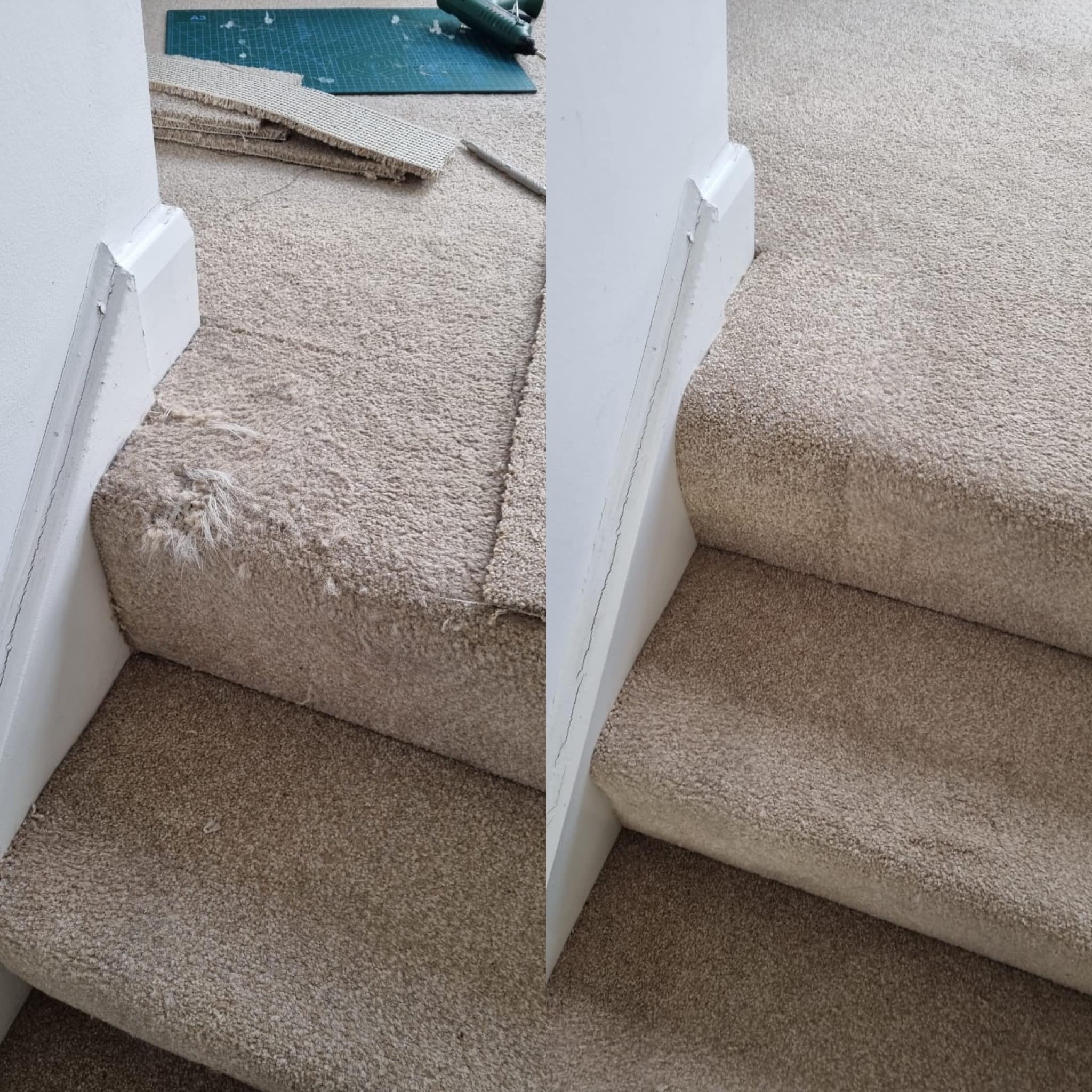
A typical patch repair — usually completed within an hour and priced accordingly.
UK Carpet Repair Price Guide by Job Type
Here’s a breakdown of typical UK pricing for the most common carpet repair jobs, based on the type of damage and the complexity of the fix:
| Repair Type | Typical Price |
|---|---|
| Small patch repair (cigarette burn, small stain damage) | £80–£120 |
| Larger patch repair (pet damage, larger burn area) | £120–£180 |
| Doorway or threshold repair | £90–£150 |
| Seam repair or rejoin | £100–£160 |
| Carpet re-stretching (single room) | £120–£200 |
| Carpet re-stretching (whole property) | £200–£400+ |
| Stair carpet repair | £100–£180 |
| Complex multi-area repair job | £200–£250+ |
These figures reflect typical UK market rates as of 2026 and can vary by region, with London and the South East generally commanding prices at the higher end of each range.
Always price the job, not just the time. A skilled, invisible patch repair that takes 40 minutes is worth more to the customer than the time spent — it’s saving them hundreds of pounds compared to replacing the carpet entirely.
What Affects Carpet Repair Pricing?
Several factors influence what you can realistically charge for a repair job. Understanding these helps you quote accurately and avoid underpricing your work:
Type of Damage
Burns and small patches are quicker than re-stretching or multi-area jobs, and price accordingly.
Carpet Type
Wool and patterned carpets require more skill to match and blend than standard synthetic carpets.
Availability of Donor Carpet
If matching donor carpet isn’t available from the customer, sourcing it adds time and cost.
Location & Travel
Urban areas and properties further from your base may justify a call-out fee or higher rate.
Job Complexity
Stairs, corners, and multi-room repairs take more time and skill than a flat, open area patch.
Customer Type
Landlords and letting agents often have multiple properties — building a relationship can mean repeat work at a fair, consistent rate.
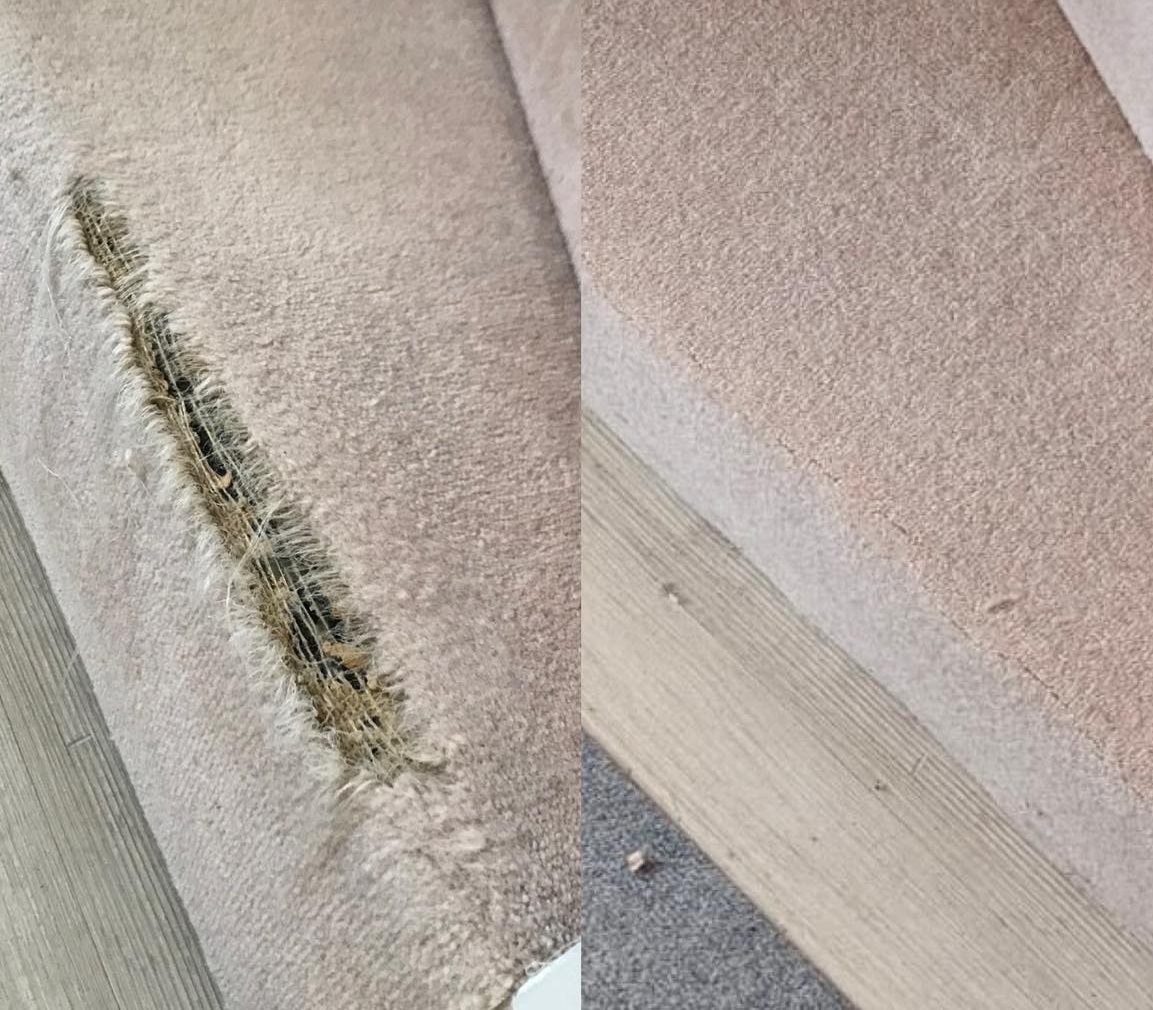
A clean, professional result — the kind of finish that justifies premium pricing.
Why Carpet Repair Has Such Strong Margins
Compared to many trade services, carpet repair has an unusually strong profit margin. The reasons come down to three things: low material cost, low equipment cost, and short job duration.
- Low material cost. Most jobs use small amounts of adhesive, seaming tape, and donor carpet — often supplied by the customer themselves. Material costs per job are typically under £10.
- Low equipment cost. A full starter toolkit costs around £180 and lasts for years with normal use. There’s no ongoing machine maintenance or replacement parts to budget for.
- Short job duration. Most repairs take 30 to 60 minutes. At an average price of £120–£150, that’s an effective hourly rate most trades would be very happy with.
A single carpet repair job often earns more per hour than the cleaning job it was upsold from — with a fraction of the material and equipment cost.
How to Price Your Own Jobs Confidently
If you’re new to offering carpet repair, here’s a simple approach to pricing that works well in practice:
- Assess the damage on arrival. Identify the repair type, size of the area, and whether donor carpet is available.
- Use the price guide above as a starting baseline. Adjust up for complexity, carpet type, or access difficulty.
- Compare to the cost of replacement. Always frame your price against the alternative — replacing the whole carpet usually costs several times more than a repair.
- Quote a fixed price before starting. Customers prefer certainty, and it protects you from disputes once the work is done.
- Factor in travel for distant jobs. Add a call-out fee or adjust your price if the property is a significant distance from your usual working area.
When quoting, mention the cost of full carpet replacement alongside your repair price. A customer comparing an £150 repair to an £800+ replacement will see your price as excellent value — rather than questioning why a “quick fix” costs that much.
Building Repeat Income From Repair Pricing
Once you’re confident with pricing individual jobs, the real value comes from building relationships with customers who need repairs regularly — particularly landlords, letting agents, and property managers. These customers often have multiple properties and ongoing repair needs between tenancies.
Offering a slightly discounted rate for repeat, multi-property customers can be worth it in exchange for guaranteed, regular work — while still charging full price for one-off domestic jobs.
Learn to Price and Deliver Repairs Professionally
Our hands-on training course covers exactly how to assess, quote, and carry out every common repair type — plus how to sell the service to your existing customers. £399 all inclusive.
Book Your Place →Frequently Asked Questions
Is carpet repair cheaper than replacement?
Almost always. A typical repair costs £80–£250+, while replacing a whole room of carpet can cost several hundred to over a thousand pounds depending on size and carpet quality. This price gap is one of the strongest selling points when quoting customers.
Do prices vary by region in the UK?
Yes. Prices in London and the South East tend to sit at the higher end of the ranges listed above, while other regions may see slightly lower average prices. Always check local market rates where possible.
Should I charge a call-out fee?
Many carpet repair professionals build a standard call-out or travel charge into pricing for jobs outside their usual working area, rather than charging it separately. Either approach works — consistency is what matters most to customers.
How do I learn to price jobs accurately?
Our carpet repair training course covers pricing in detail, including how to assess job complexity and quote confidently. Most trainees are pricing and quoting jobs accurately within their first few repairs after training.